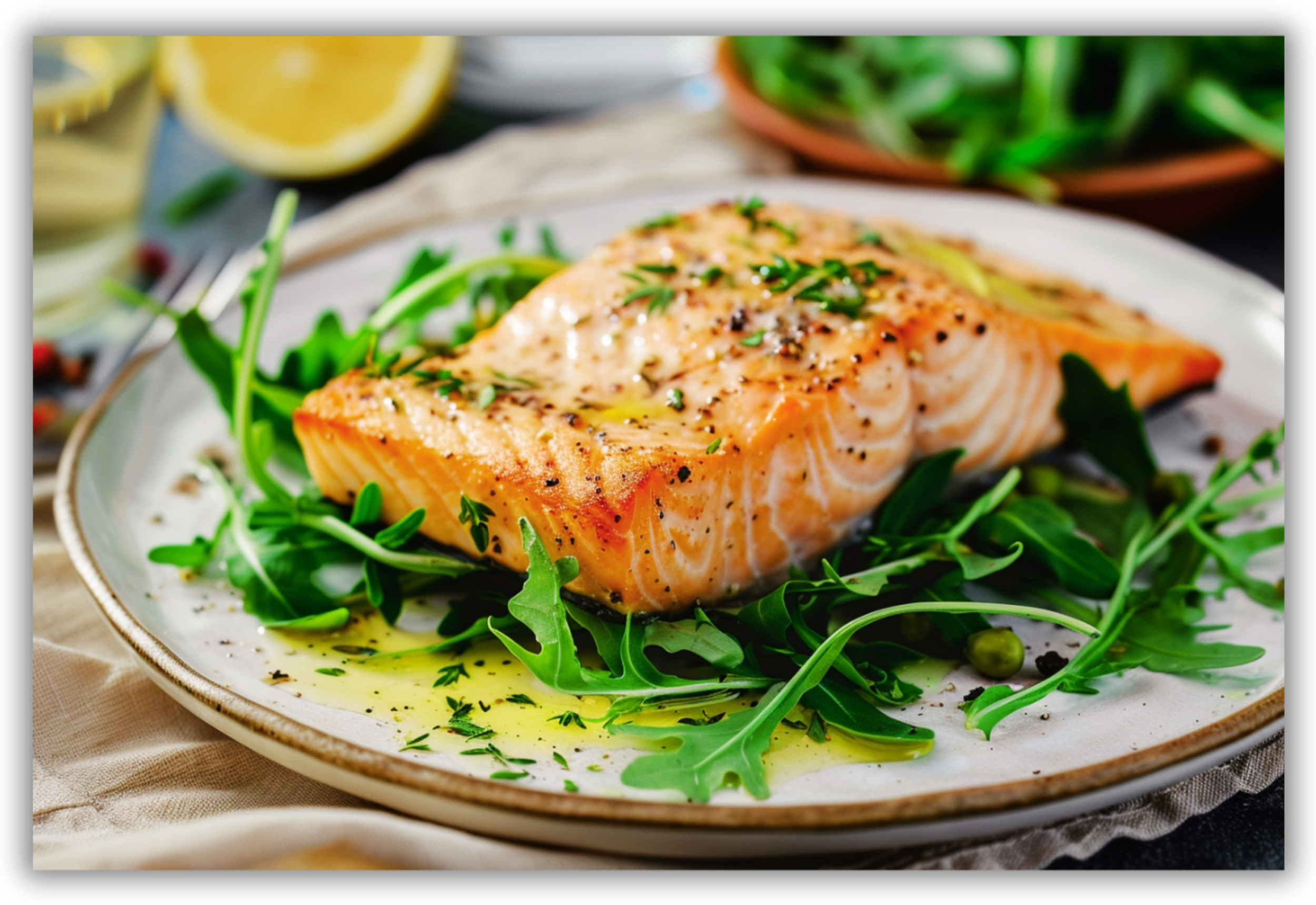
Salmon with Olive Oil,
Lemon, and Greens
A quiet meal that supports steady energy and evening calm
INTRO
Mediterranean Protein
This meal became part of evenings
when energy felt fragile.
It is simple.
It is nourishing.
It supports without asking much.
Why This Works
• Fatty fish provides omega-3s associated with inflammatory balance
• Protein supports repair and steady energy
• Greens contribute minerals and fiber
What restores energy is often what asks the least from the body.
Ingredients
Ingredients (serves 2)
• 2 slices of salmon
• Green salad (lettuce and rocket)
• Olive oil
• Flax seeds (ground at the last moment)
• Sea salt
Energy returns more easily when the body feels supported, not pushed.
Preparation
Bring a pan to medium heat
and add a small amount of olive oil.
Place the salmon gently in the pan,
skin side down if present.
Let it cook without moving it
for a few minutes, allowing
a light crust to form.
Turn once, then finish cooking slowly
until the center remains soft and moist.
While the salmon cooks, prepare the greens.
Rinse and dry them well, then dress lightly
with olive oil and a small pinch of sea salt.
Finish the salmon with a squeeze of lemon
and a touch of salt.
Serve immediately, alongside the greens.
The center should remain tender, not dry.
Serving
Eat warm.
Keep conversation soft.
Let the meal settle naturally.
Allow the evening to unfold
without direction or urgency.
Why These Meals Matter
Energy is not always something to create.
Sometimes, it is something to protect.
Meals like this do not stimulate.
They stabilize.
They reduce internal demand.
They allow the body to recover quietly.
Circulation, inflammation,
and nervous system tone
respond to consistency.
Not intensity.
The body does not seek extremes.
It responds to what is repeated.
Stability becomes the signal.
Nutritional Overview (per serving – estimated)
Calories: ~420–460 kcal
A nourishing, steady energy load appropriate for an evening meal
Fat: ~28–32 g
Primarily from salmon and olive oil; rich in omega-3 fatty acids
Carbohydrates: ~6–8 g
Very low; mainly from leafy greens
Protein: ~28–32 g
High-quality protein that supports repair and sustained energy
Sugar: ~2–3 g
Naturally occurring from greens; no added sugars
Sodium: ~350–450 mg
Moderate; easily adjusted
Potassium: ~700–850 mg
Supports muscle and nervous system function
Cholesterol: ~85–95 mg
Present due to salmon; within dietary guidelines for most individuals
Glycemic Index:
Low (estimated), driven by protein, fats, and non-starchy vegetables
Allergens:
Fish
Health Benefits:
• Provides omega-3 fatty acids associated with inflammatory balance
• Supports tissue repair and steady evening energy through protein
• Encourages satiety without heaviness
• Aligns with anti-inflammatory, nervous-system-supportive eating patterns
Provides approximately 45–55% of daily protein needs and a meaningful contribution to omega-3 intake.