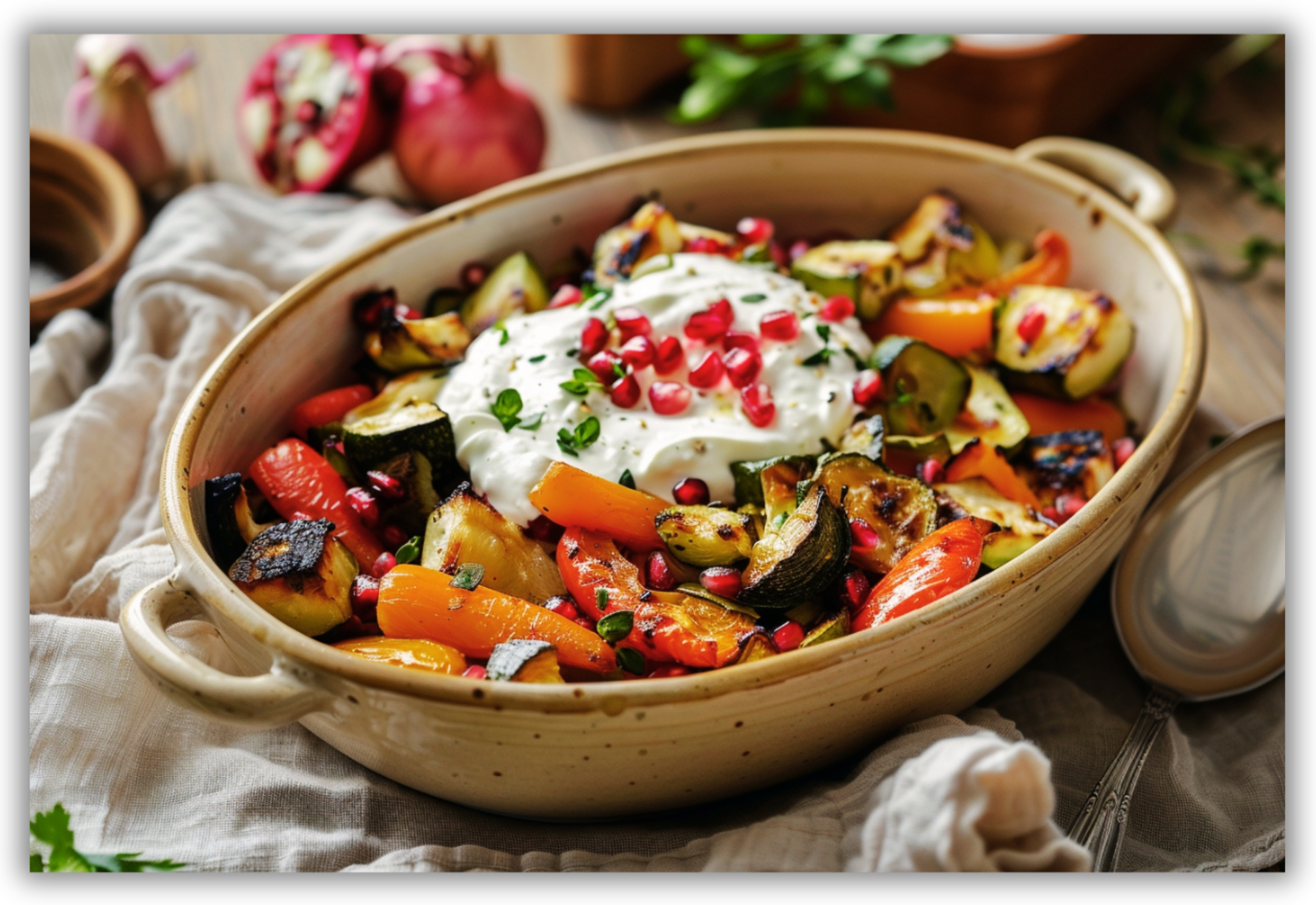
Roasted Vegetables with
Pomegranate and Yogurt
A shared plate that invites reconnection and quiet presence
INTRO
Shared Intimacy Plate
This dish appeared during moments of reconnection.
Colorful.
Textured.
Placed at the center of the table.
It did not ask to be divided.
Only to be shared.
Why This Works
• Vegetables provide fiber and volume
• Yogurt contributes protein and fermentation
• Pomegranate adds brightness without heaviness
Shared plates shift attention from food to presence.
Ingredients
Ingredients (serves 2)
• Mixed vegetables (zucchini, carrots, fennel, broccoli or seasonal mix)
• Olive oil
• Sea salt
• Yogurt
• Pomegranate seeds
What is placed at the center is rarely just food.
Preparation
Preheat the oven to 200°C (400°F).
Cut the vegetables into similar-sized pieces
so they cook evenly.
Place them on a baking tray,
drizzle with olive oil,
and add a pinch of sea salt.
Toss gently to coat.
Spread them in a single layer.
Avoid overcrowding.
Roast until tender and lightly caramelized,
turning once halfway through.
Let the vegetables rest for a few minutes
after removing them from the oven.
Spread yogurt on the base of a serving dish
or spoon it gently over the vegetables.
Finish with pomegranate seeds just before serving.
Serving
Place at the center.
Share from the same dish.
Let portions happen naturally.
Let the pace slow on its own.
Why These Meals Matter
Shared meals change how attention moves.
They remove division.
They reduce control.
They create a space
where interaction replaces structure.
Food becomes a medium,
not the focus.
When meals are shared this way,
the body softens.
The need to measure,
to portion,
to manage—fades.
And what remains
is connection.
Nutritional Overview (per serving – estimated)
Calories: ~280–320 kcal
A balanced, satisfying plate suitable as a shared dish or light main
Fat: ~12–15 g
From yogurt and olive oil; supports satiety without heaviness
Carbohydrates: ~30–35 g
Mostly from vegetables and pomegranate
Protein: ~10–12 g
From yogurt; contributes to fullness and steady energy
Sugar: ~6–8 g
Naturally occurring; no added sugars
Sodium: ~300–400 mg
Low to moderate
Potassium: ~600–750 mg
Supports muscle and fluid balance
Cholesterol: ~20–30 mg
Present due to yogurt
Glycemic Index:
Low to low–moderate (estimated), moderated by fiber and fats
Allergens:
Dairy
Health Benefits:
• Supports digestive ease through fiber and fermentation
• Encourages satiety without heaviness
• Provides antioxidants from vegetables and pomegranate
• Aligns with anti-inflammatory, shared-meal patterns
Provides approximately 20–25% of daily fiber needs and meaningful micronutrient support.