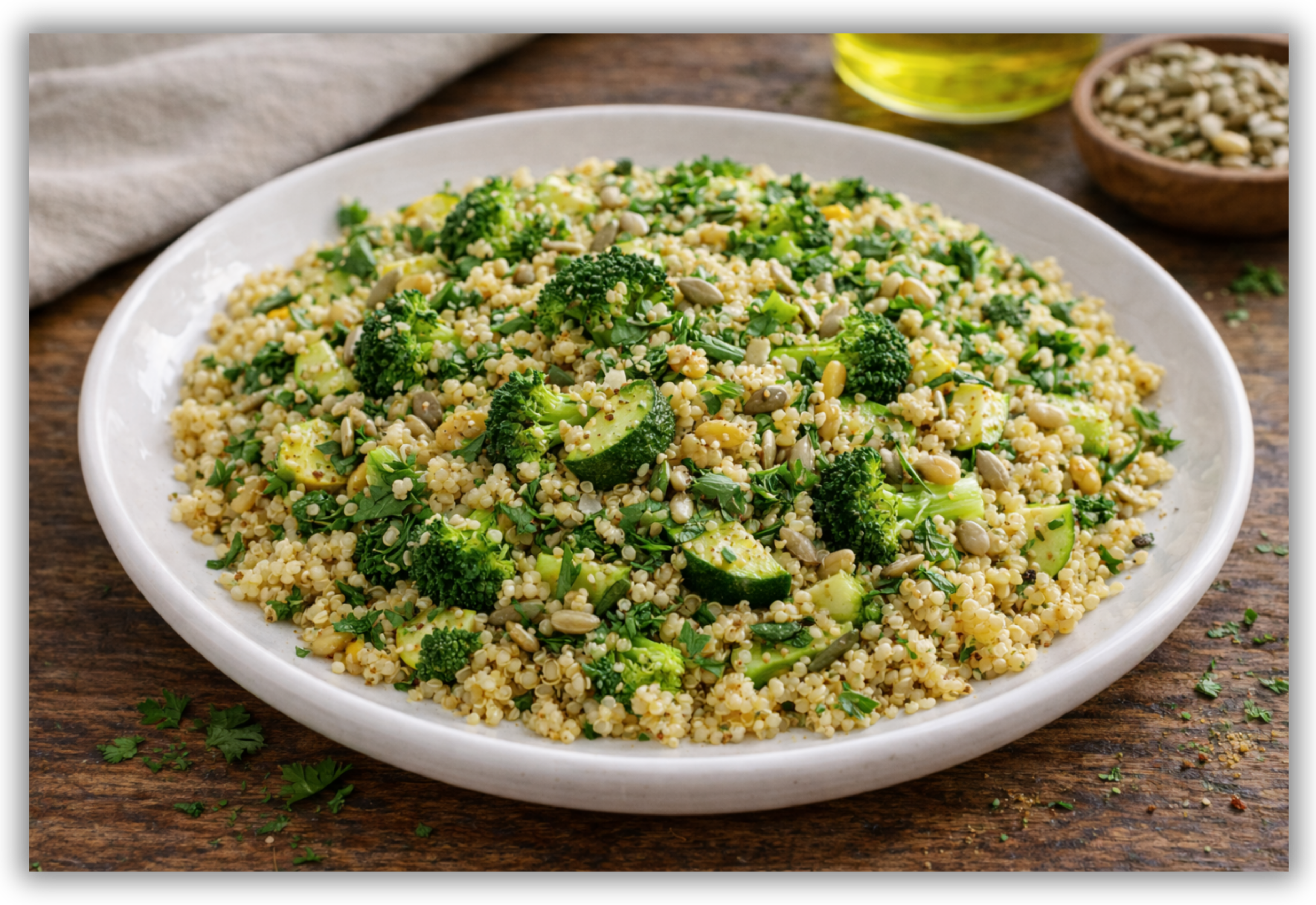
Quinoa with Vegetables,
Herbs, and Seeds
Light balance that quietly completes
INTRO
Whole Grains & Vegetables
Light.
Complete.
Balanced.
Nothing excessive.
Everything present.
Why This Works
• Quinoa provides complete plant protein and structure
• Vegetables support fiber intake and digestion
• Seeds add minerals and gentle fats
Balance comes from what is included—and what is not.
Ingredients
Ingredients (serves 2)
• 1 cup cooked quinoa
• Mixed vegetables (broccoli, zucchini, or spinach)
• Olive oil
• Mixed seeds
• Sea salt
Completeness doesn’t require weight.
Preparation
Rinse the quinoa
under cold water
for 30–60 seconds.
Place it in a pot
with about 2 cups of water
and a pinch of sea salt.
Bring to a gentle boil.
Lower the heat,
cover,
and simmer
for 12–15 minutes.
Let it rest, covered,
for about 5 minutes.
Fluff gently
with a fork.
In a pan,
warm olive oil
over low heat.
Add the vegetables,
cut into small pieces.
Cook gently
for 5–6 minutes,
until tender
but still structured.
Add the quinoa
and combine gently.
Warm together
for 2–3 minutes.
If needed,
add a small splash of water
to keep it soft.
Remove from heat
and let it rest
for 1 minute.
Add the seeds
and a final drizzle
of olive oil.
Season lightly
with sea salt.
Serving
Eat slowly.
Let the plate
feel sufficient
without needing more.
Clarity often begins
with enough.
Why These Meals Matter
Meals like this
offer structure
without heaviness.
They support the body
through balance,
not stimulation.
And in that balance,
energy becomes steady,
clear,
and sustainable.
Nutritional Overview (per serving – estimated)
Calories: ~340–370 kcal
A light yet complete energy load
Fat: ~16–18 g
From olive oil and seeds; supports satiety and balance
Carbohydrates: ~38–42 g
Complex carbohydrates released steadily
Protein: ~11–13 g
Complete plant protein from quinoa
Sugar: ~3–5 g
Naturally occurring; no added sugars
Sodium: ~300–400 mg
Low to moderate
Potassium: ~500–650 mg
Supports fluid balance and nervous system function
Cholesterol: 0 mg
No dietary cholesterol
Glycemic Index:
Low to moderate (estimated), buffered by fiber and fats
Allergens:
Seeds (varies by mix used)
Health Benefits:
• Supports balanced energy and steady focus
• Encourages digestive ease through simple preparation
• Provides healthy fats and essential minerals
• Aligns with gluten-free, anti-inflammatory eating patterns
Provides approximately 20–25% of daily protein needs with sustained, light nourishment.