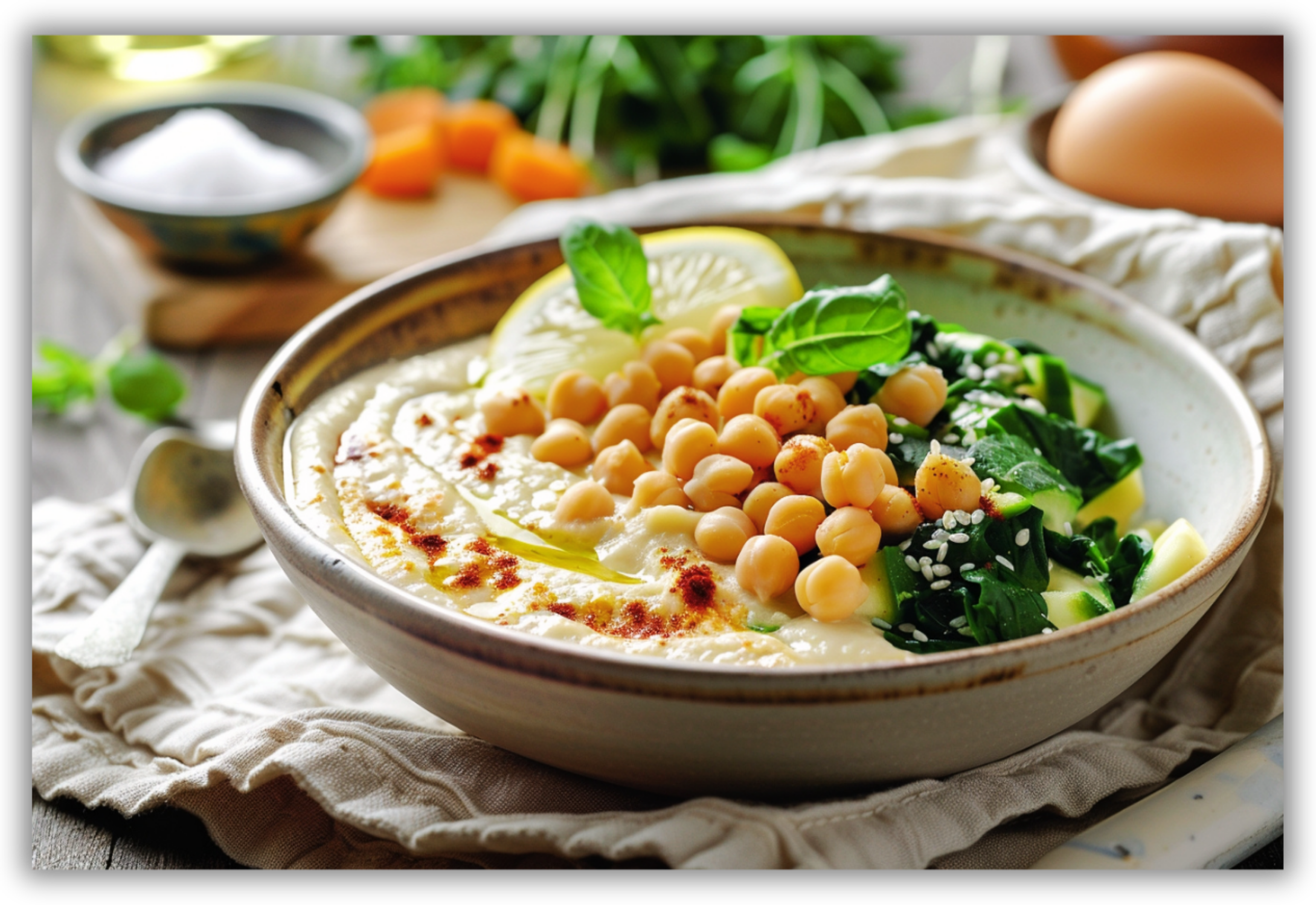
Legume Bowl with
Vegetables and Tahini
A steady bowl that resolves hunger without heaviness
INTRO
One-Bowl Balanced Plate
Plant-based.
Complete.
Steady.
Legumes lead.
Vegetables support.
Tahini anchors.
This bowl holds
without weighing down.
Why This Works
• Legumes provide fiber and plant protein
• Vegetables add volume and micronutrients
• Tahini adds fats and minerals that slow digestion
Satiety becomes easier when the structure is clear.
Ingredients
Ingredients (serves 1-2)
• Cooked lentils or chickpeas
• Cooked or raw vegetables (as tolerated)
• Tahini
• Lemon juice
• Olive oil
• Sea salt
A complete bowl lowers urgency.
Preparation
If using dry legumes,
rinse them first
and soak if needed.
Cook in water
with a pinch of salt
until tender
but still holding shape.
Drain and set aside.
In a pan,
warm olive oil
over low heat
for about 1 minute.
Add the vegetables,
cut into even pieces.
Cook gently
for 4–6 minutes,
until just tender.
Add the cooked legumes
and warm everything together
for 2–3 minutes,
stirring gently.
If needed,
add a small splash of water
to keep the texture soft.
In a small bowl,
mix tahini
with lemon juice
and a little water
until smooth and pourable.
Remove the pan
from heat
and let it rest
for about 1 minute.
Transfer to a bowl
and drizzle
with the tahini sauce.
Finish with
a small drizzle
of olive oil
and a pinch of sea salt.
Stir softly,
just enough
to bring it together.
Serving
Eat without rushing.
Let the bowl
settle the body
before it fills it.
This meal
works through steadiness.
Why These Meals Matter
Strong hunger
does not always need speed.
It needs structure.
Meals like this
create completion
without heaviness.
They bring enough
fiber, fat, and protein
to quiet the search
for more.
That quiet
is what makes the bowl
so regulating.
Nutritional Overview (per serving – estimated)
Calories: ~380–420 kcal
A deeply satisfying, plant-based energy load suitable for stronger hunger
Fat: ~20–24 g
Primarily from tahini and olive oil; supports satiety and slow digestion
Carbohydrates: ~36–40 g
Mostly complex carbohydrates from legumes and vegetables
Protein: ~13–16 g
Plant-based protein that supports fullness and steady energy
Sugar: ~3–5 g
Naturally occurring from vegetables and legumes; no added sugars
Sodium: ~300–450 mg
Low to moderate
Potassium: ~650–850 mg
Supports muscle and nervous system function
Cholesterol: 0 mg
No dietary cholesterol
Glycemic Index:
Low to low–moderate (estimated), buffered by fiber, fats, and legumes
Allergens:
Sesame (tahini); legumes
Health Benefits:
• Supports deep satiety through fiber, fats, and plant protein
• Encourages steady energy without heaviness
• Provides minerals that support metabolic and nervous system balance
• Aligns with anti-inflammatory, plant-forward eating patterns
Provides approximately 25–30% of daily fiber needs and a meaningful contribution to plant-based protein intake.