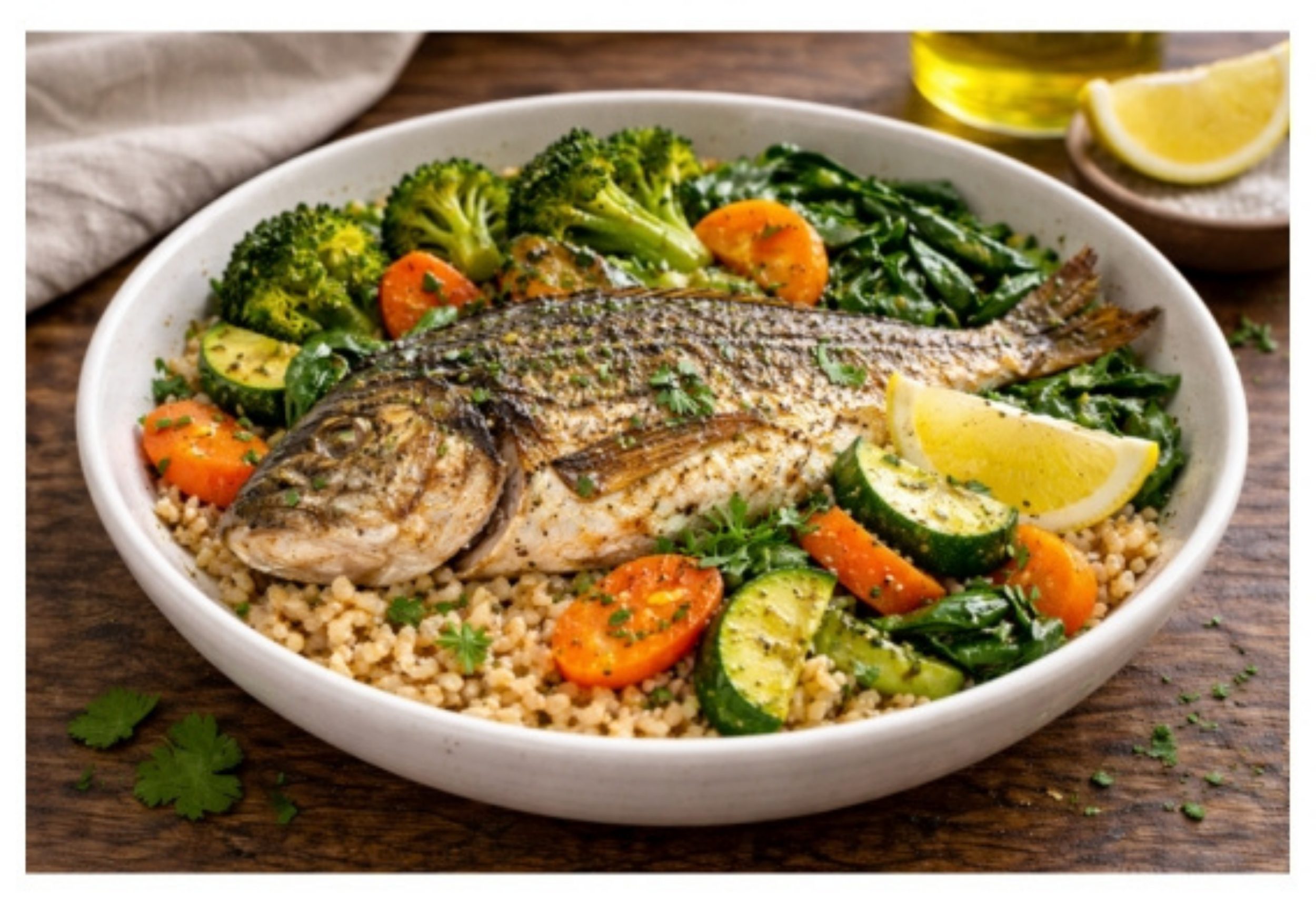
Fish Bowl with
Vegetables and Olive Oil
Gentle strength for quieter evenings
INTRO
One-Bowl Balanced Plate
Protein
without pressure.
Light.
Complete.
Quietly supportive.
This bowl
holds strength
without heaviness.
Why This Works
• Fish provides easily digestible protein
• Vegetables add volume and minerals
• Olive oil supports satiety and inflammatory balance
Strength does not need to feel heavy.
Ingredients
Ingredients (serves 1-2)
• Cooked fish (white fish or salmon)
• Cooked vegetables (greens, zucchini, carrots)
• Extra-virgin olive oil
• Sea salt
• Optional lemon
Support can be quiet and complete.
Preparation
If the fish
is not yet cooked,
prepare it gently.
Place it in a pan
with a small drizzle
of olive oil.
Cook over low heat
for 6–8 minutes,
turning once if needed,
until just cooked through.
The flesh
should be opaque
and flake easily,
while remaining soft.
Let it rest
for 2–3 minutes,
then break it
into large pieces.
In a separate pan,
warm olive oil
over low heat
for about 1 minute.
Add the cooked vegetables
and warm gently
for 3–4 minutes,
stirring occasionally.
Avoid browning.
Add the fish
to the vegetables
and warm together
for 1–2 minutes,
just enough
to bring everything
to the same temperature.
Do not overmix.
Remove from heat
and let the bowl rest
for about 1 minute.
Transfer to a bowl.
Finish with olive oil,
sea salt,
and optional lemon.
Serving
Eat warm.
This bowl
belongs to quieter evenings.
Let the body
settle as it eats.
Why These Meals Matter
Not every meal
needs to stimulate.
Some meals
need to support.
This bowl offers
protein, softness,
and ease
in the same space.
That balance
is what makes it
so useful
when rest matters
more than momentum.
Nutritional Overview (per serving – estimated)
Calories: ~360–410 kcal
A light yet strengthening energy load suitable for quiet evenings
Fat: ~20–24 g
Primarily from olive oil and fish fats; supports satiety and balance
Carbohydrates: ~8–14 g
Low overall; mainly from vegetables
Protein: ~24–30 g
High-quality protein that supports strength without heaviness
Sugar: ~3–5 g
Naturally occurring from vegetables; no added sugars
Sodium: ~350–450 mg
Moderate; easily adjusted
Potassium: ~650–850 mg
Supports muscle and nervous system function
Cholesterol: ~70–100 mg
Varies by fish choice
Glycemic Index:
Low (estimated), driven by protein, fats, and vegetables
Allergens:
Fish
Health Benefits:
• Supports strength and repair through gentle, high-quality protein
• Encourages satiety without digestive burden
• Aligns with anti-inflammatory, evening-friendly eating patterns
• Provides complete nourishment without overstimulation
Provides approximately 40–50% of daily protein needs while remaining light and calming.