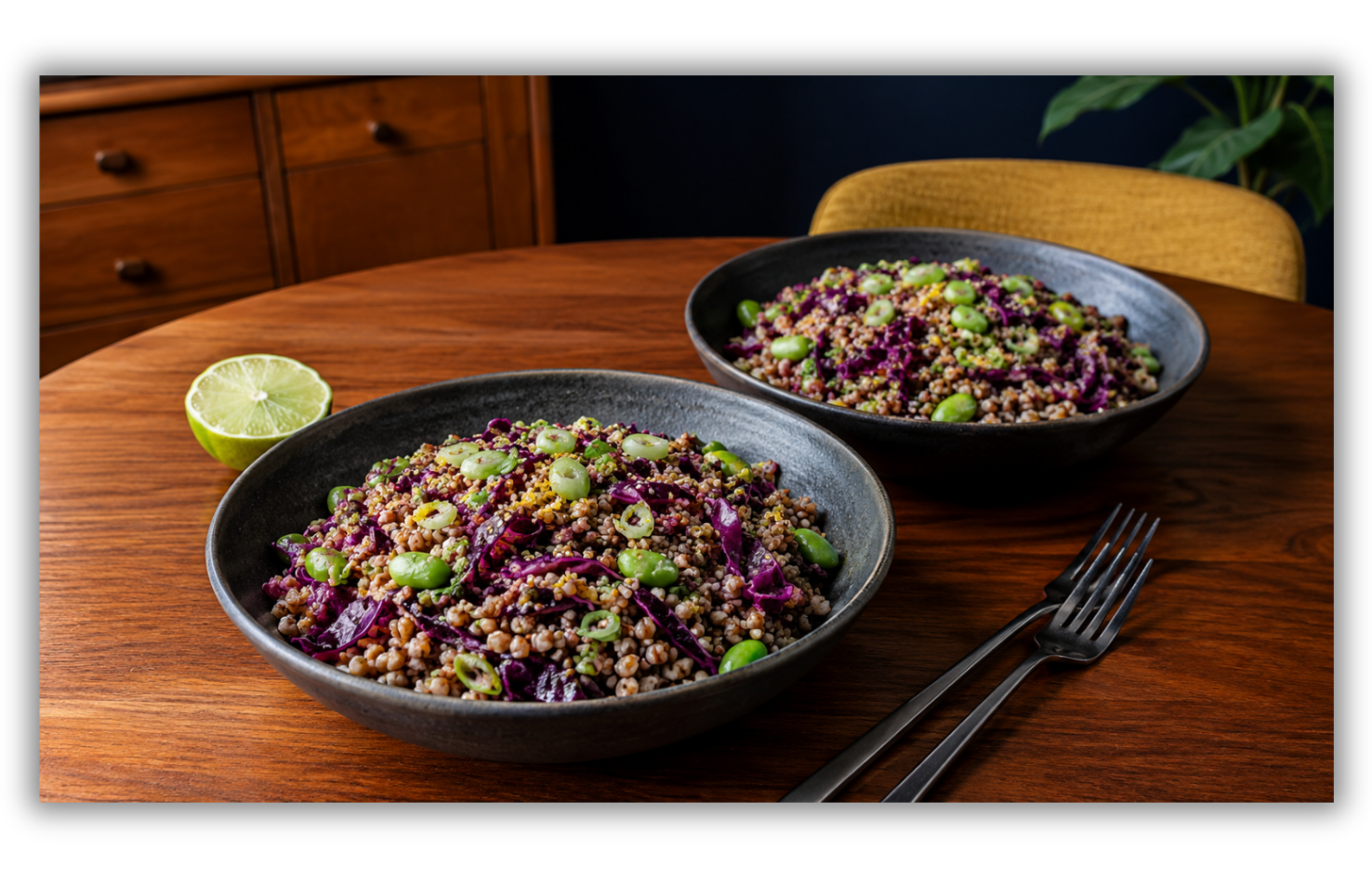
Buckwheat with Red Cabbage, Edamame, and Lime
A colorful plant-based version with a lightly crisp texture
AT A GLANCE
A COMPLETE PLANT-BASED BOWL WITH CONTRAST
Buckwheat creates the foundation, while edamame takes the place of cheese as a substantial component rather than simply another vegetable. Red cabbage, ginger, and lime add color, freshness, and a lightly crisp texture.
Servings: 2
Preparation Time: approximately 25 minutes, depending on the cooking time of the buckwheat
Why This Works
Buckwheat provides the carbohydrate foundation and a warm, substantial texture.
Edamame contributes protein, fiber, and carbohydrates, allowing the bowl to remain complete without cheese.
Red cabbage adds vegetable volume, color, and a lightly crisp character.
Lime, ginger, sesame seeds, and olive oil create flavor without requiring a heavy sauce.
A plant-based substitution works best when it preserves the protein component instead of simply removing it.
Ingredients
For 2 Servings
¾ cup (4.2 oz/120 g) raw buckwheat groats
10.5 oz (300 g) finely sliced red cabbage
1⅓ cups (7 oz/200 g) cooked shelled edamame
1 tablespoon extra-virgin olive oil
1 tablespoon fresh lime juice
1 tablespoon (0.35 oz/10 g) sesame seeds
1 teaspoon grated fresh ginger
1 scallion, optional
Black pepper, to taste
A small pinch of salt
Treat edamame as a deliberate protein component, not as an extra vegetable.
Preparation
Cook the buckwheat according to the package directions. Drain it well and let it rest briefly so excess moisture can evaporate.
Warm half of the olive oil in a large skillet over medium heat. Add the finely sliced red cabbage and cook for 6–8 minutes, stirring occasionally, until softened while retaining some texture.
Add the cooked shelled edamame during the final 2 minutes and stir until heated through.
Add the cooked buckwheat. Season with the remaining olive oil, lime juice, grated ginger, black pepper, and a small pinch of salt. Toss gently to combine.
Finish with the sesame seeds and thinly sliced scallion, if using. Serve warm.
Serving Note
Add the sesame seeds and scallion immediately before serving so they remain distinct from the warm buckwheat and softened cabbage.
If using frozen edamame, cook it according to the package directions before measuring the quantity required for the recipe.
Useful Substitutions
Replace the red cabbage with finely sliced green or Savoy cabbage.
Use unsalted pumpkin seeds instead of sesame seeds when sesame is not suitable.
Omit the scallion or replace it with finely chopped chives.
Use ¼ teaspoon ground ginger when fresh ginger is unavailable, adjusting to taste.
For strict gluten avoidance, use certified gluten-free buckwheat.
What This Recipe Teaches
A completely plant-based bowl does not need to lose structure when cheese is removed. The useful question is not only what disappears, but which ingredient will take over its nutritional and practical role.
Here, edamame does more than add color. It becomes the substantial component that works alongside buckwheat, while cabbage, lime, ginger, and sesame shape the character of the meal.
A successful substitution replaces a function, not merely an ingredient.
Nutrition Direction
Edamame replaces the cheese while contributing protein, fiber, and carbohydrates. It should not be treated as merely another vegetable. The bowl remains complete without requiring an additional protein food.
Buckwheat and edamame both contribute carbohydrates. Their presence alongside cabbage, seeds, and olive oil creates a mixed meal, although individual glucose responses will differ.
Allergens: soy and sesame. For strict gluten avoidance, use certified gluten-free buckwheat and check all packages for possible cross-contact.
When to Choose This Variation
When you want a completely plant-based lunch
When you need to replace cheese without removing the protein component
When you prefer crisp textures and less familiar flavors