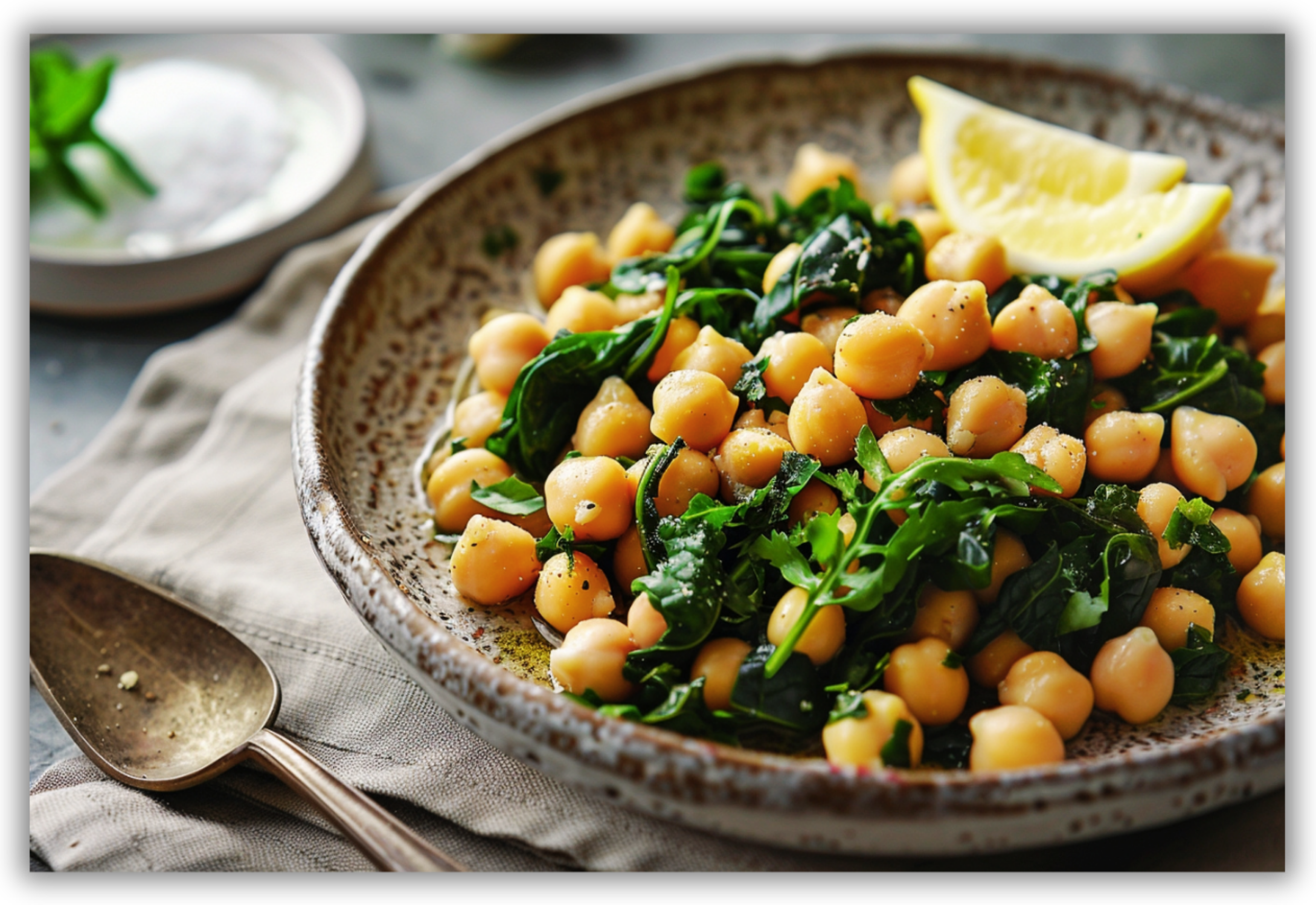
Chickpeas with Greens,
Garlic, and Tahini
A warm plate that satisfies without urgency
INTRO
Grounding Plates
Rich
without heaviness.
Warm chickpeas,
soft greens,
and tahini
come together
in a steady,
complete plate.
It nourishes deeply
without pushing the body.
Why This Works
• Chickpeas provide fiber and plant protein for sustained satiety
• Greens add minerals and volume
• Tahini contributes fats and micronutrients that slow digestion
Completion reduces the need for more.
Ingredients
Ingredients (serves 2)
• 1½ cups cooked chickpeas
• A handful of leafy greens (spinach, chard, or kale)
• 1 tablespoon olive oil
• 1 small garlic clove, lightly crushed
• 1 tablespoon tahini
• Lemon juice, to taste
• Sea salt
Satiety is a form of calm.
Preparation
Warm the olive oil
in a pan over low heat
for about 1 minute.
Add the crushed garlic
and let it infuse gently
for 30–60 seconds.
Do not let it brown.
Add the chickpeas
and stir to coat evenly.
Warm for 3–4 minutes,
stirring occasionally.
If dry,
add a small splash of water.
Add the greens
and cook for 2–3 minutes
until just wilted.
Remove from heat
and let rest for 1 minute.
In a small cup,
loosen the tahini
with water and lemon juice.
Drizzle over the chickpeas.
Add salt
and adjust lemon
to taste.
Serving
Chew more slowly
than usual.
Let the plate
do the work.
This meal regulates best
when eaten
without distraction.
Why These Meals Matter
Hunger is not only about food.
It is also about completion.
Meals like this
offer enough.
Enough structure.
Enough nourishment.
Enough time to settle.
When the body feels complete,
it stops searching.
And that quiet
is where regulation begins.
Nutritional Overview (per serving – estimated)
Calories: ~360–400 kcal
A deeply satiating, plant-based energy load suitable as a main meal
Fat: ~18–20 g
Primarily from tahini and olive oil; supports satiety and slow digestion
Carbohydrates: ~38–42 g
Mostly complex carbohydrates from chickpeas
Protein: ~12–14 g
Plant-based protein that supports fullness and sustained energy
Sugar: ~4–5 g
Naturally occurring; no added sugars
Sodium: ~350–450 mg
Moderate
Potassium: ~650–800 mg
Supports muscle and nervous system function
Cholesterol: 0 mg
No dietary cholesterol
Glycemic Index:
Low to low–moderate (estimated), buffered by fiber and fats
Allergens:
Sesame (tahini)
Health Benefits:
• Supports deep satiety through fiber, fats, and plant protein
• Encourages steady energy without heaviness
• Provides minerals that support metabolic balance
• Aligns with anti-inflammatory, plant-forward eating patterns
Provides approximately 25–30% of daily fiber needs and a meaningful contribution to plant-based protein intake.